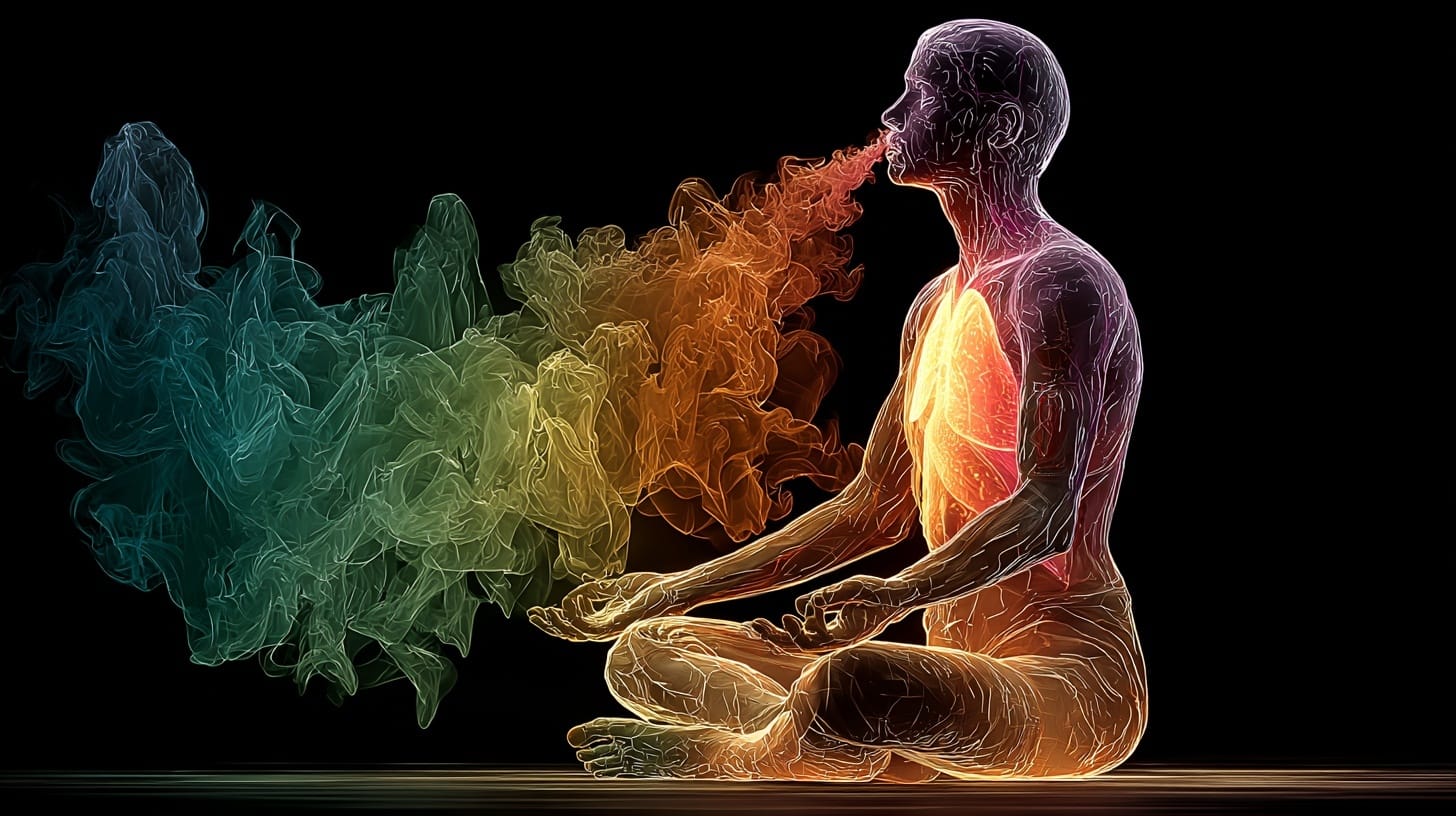
We’ve decided that breathing other people is gross.
Not metaphorically. Literally.
Skin particles. Shared air. Microbes with ambition. We treat it like a design flaw in the human body. We treat it like something to filter, sanitize, deodorize, and apologize for.
But what if that instinct is backward?
What if breathing others isn’t a problem to solve, but the original feature?
Yes, there are moments when sharing air isn’t safe.
The pandemic made that painfully clear.
Sometimes distance is care. Sometimes separation is survival.
But emergency conditions aren’t a blueprint for human life.
What we learned under crisis doesn’t erase what shaped us over millennia.
The Fantasy of the Sealed Human
Once biology made it undeniable that humans constantly exchange air, microbes, particles, and pathogens, something quietly broke.
The fantasy of the sealed individual collapsed.
Anthropology has a word for this: humans aren’t bounded units. We’re porous.
Not just socially. Biologically.
That reframes a lot:
- Society isn’t just cooperation. It’s continuous exposure.
- Culture isn’t just shared ideas. It’s shared environments (including digital).
- Identity isn’t self-contained. It’s relational.
We don’t just think together.
We co-regulate.
Humans Evolved Breathing Together
Humans didn’t evolve on Zoom.
We evolved in small, co-breathing groups where:
- Constant microbial exchange shaped immune tolerance
- Familiar bodies meant familiar microbes
- Familiar microbes meant lower biological alarm
This isn’t about eating skin flakes for breakfast.
It’s more like a shared body memory that forms over time.
It’s why "smelly grandpa" gets a pass.
It’s why your partner’s sibling looks unsettled the first ten times you meet.
It’s why endless video calls made people tired in ways sleep couldn’t fix.
Your nervous system knows when something’s missing, even if Slack says "all caught up."
Distance Makes Society Brittle
When humans stop sharing air, a few things happen.
Research from spaceflight, submarines, and Antarctic stations shows the same pattern:
- Immune systems get weird
- Microbiomes collapse
- Inflammation rises
- Social bonds fray
- Conflict increases—even with constant communication
Turns out, shared air isn’t optional for long-term cohesion.
Online relationships are real.
They just run on thinner biological bandwidth.
They activate thinking empathy, not somatic regulation.
They connect minds, not bodies.
Without presence (without rhythm, breath, proximity) society becomes contractual.
Empathy becomes optional.
Bonds become fragile.
Why Places Matter Again
This is why spaces matter more than ever.
Restaurants. Museums. Recording studios. Movie theaters. Offices.
Not because Zoom failed—but because isolation succeeded too well.
These places aren’t about productivity.
They’re about shared exposure.
You don’t just exchange ideas in a room.
You exchange timing. Mood. Energy. Breath.
Email can send the message.
But the message lands differently when it rides a little pheromone.
Breathing Others Isn’t Sacred. It’s Real.
This isn’t mysticism.
And it’s not nostalgia.
Breathing others isn’t sacred. But it‘s not meaningless either.
It’s evidence.
Humans evolved to belong by sharing environments, not by agreeing.
Belonging is physical first. Symbolic second.
So yes, go beyond touching grass.
Go breathe people.
Attend events.
Meet strangers.
Work next to someone instead of around them.
Just breathe.
Because breathing means sharing.
And sharing means belonging.